



A high water bill with no clear cause usually gets your attention fast. So does a damp wall, a musty smell, or the sound of running water when everything is turned off. At that point, most people ask the same question: does leak detection work, or is it just educated guessing?
The short answer is yes, leak detection does work. But like most plumbing answers, the real answer depends on the type of leak, where it is, how long it has been there, and whether the person diagnosing it is using the right tools and enough experience to interpret what those tools are showing.
Does leak detection work for hidden plumbing leaks?
In many cases, yes. Professional leak detection is designed to find leaks behind walls, under slabs, in ceilings, underground, and in other places where opening everything up would waste time and money. The goal is not just to confirm that you have a leak. The goal is to narrow down the location so the repair is targeted instead of destructive.
That matters because hidden leaks rarely stay small. Water can move along framing, soak drywall, weaken flooring, feed mold growth, and raise your utility bill long before the source becomes obvious. In South Florida, where humidity is already high, a hidden leak can make indoor moisture problems worse in a hurry.
A good leak detection visit should reduce guesswork, not add to it. If a technician can isolate the issue to a specific line, room, fixture group, or slab section, that gives you a clear path forward and helps avoid tearing into the wrong area.
How leak detection actually works
Leak detection is not one single test. It is usually a combination of methods used together. A trained plumber starts with symptoms, plumbing layout, pressure behavior, fixture history, and visible clues. Then they match the right tools to the situation.
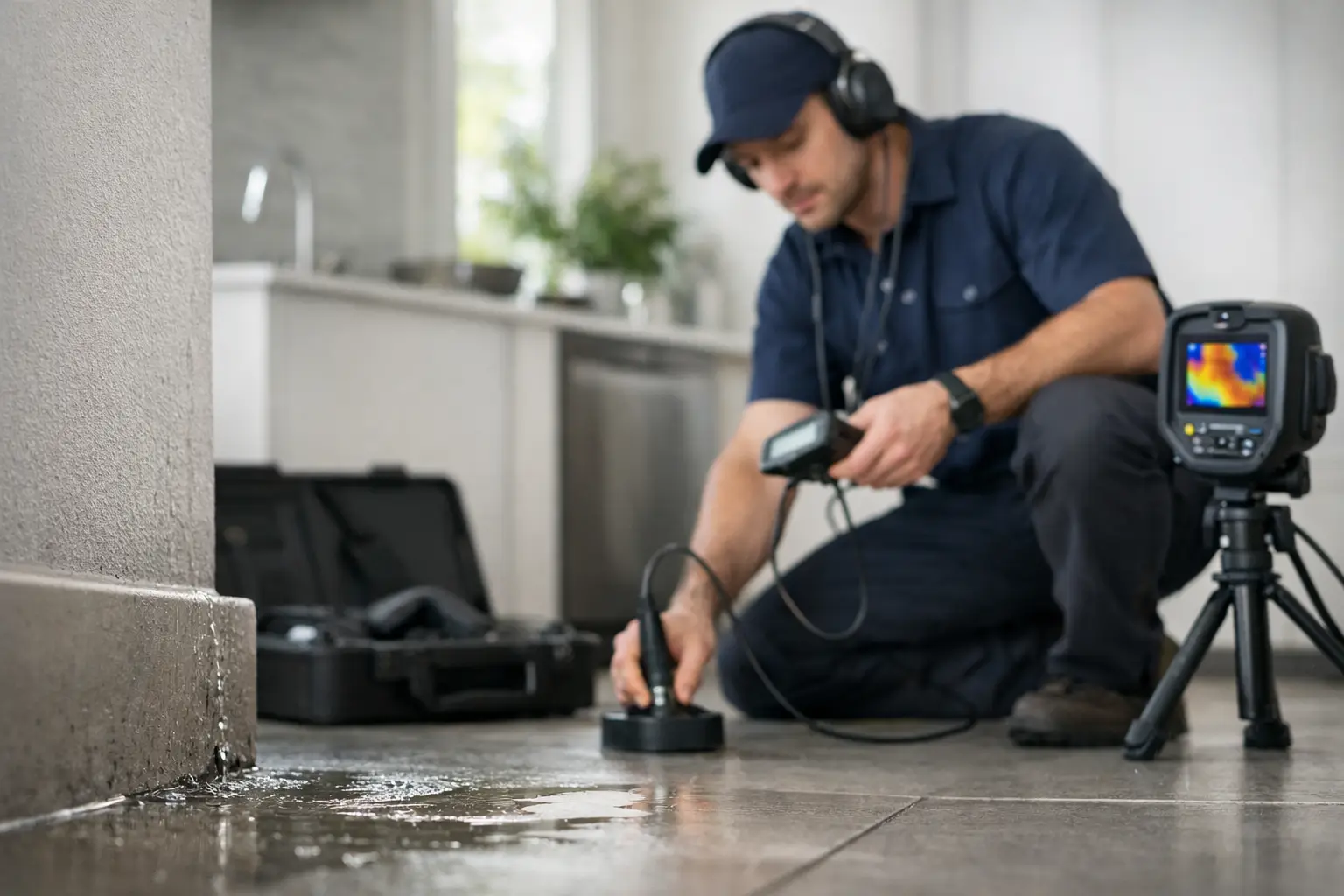
Acoustic listening equipment is one of the most common methods. Pressurized water escaping from a pipe creates sound and vibration. Specialized equipment can help detect those sounds through walls, floors, and concrete. This can be very effective, but it works best when background noise is manageable and the leak is active enough to create a clear signal.
Pressure testing is another key step. If a water line cannot hold pressure the way it should, that tells the technician there is likely a leak somewhere in the system. From there, sections can sometimes be isolated to narrow the search.
Camera inspections are often used when the issue may involve drain lines rather than pressurized supply lines. A sewer or drain camera can reveal cracks, separations, root intrusion, and blockages that may be causing water where it does not belong.
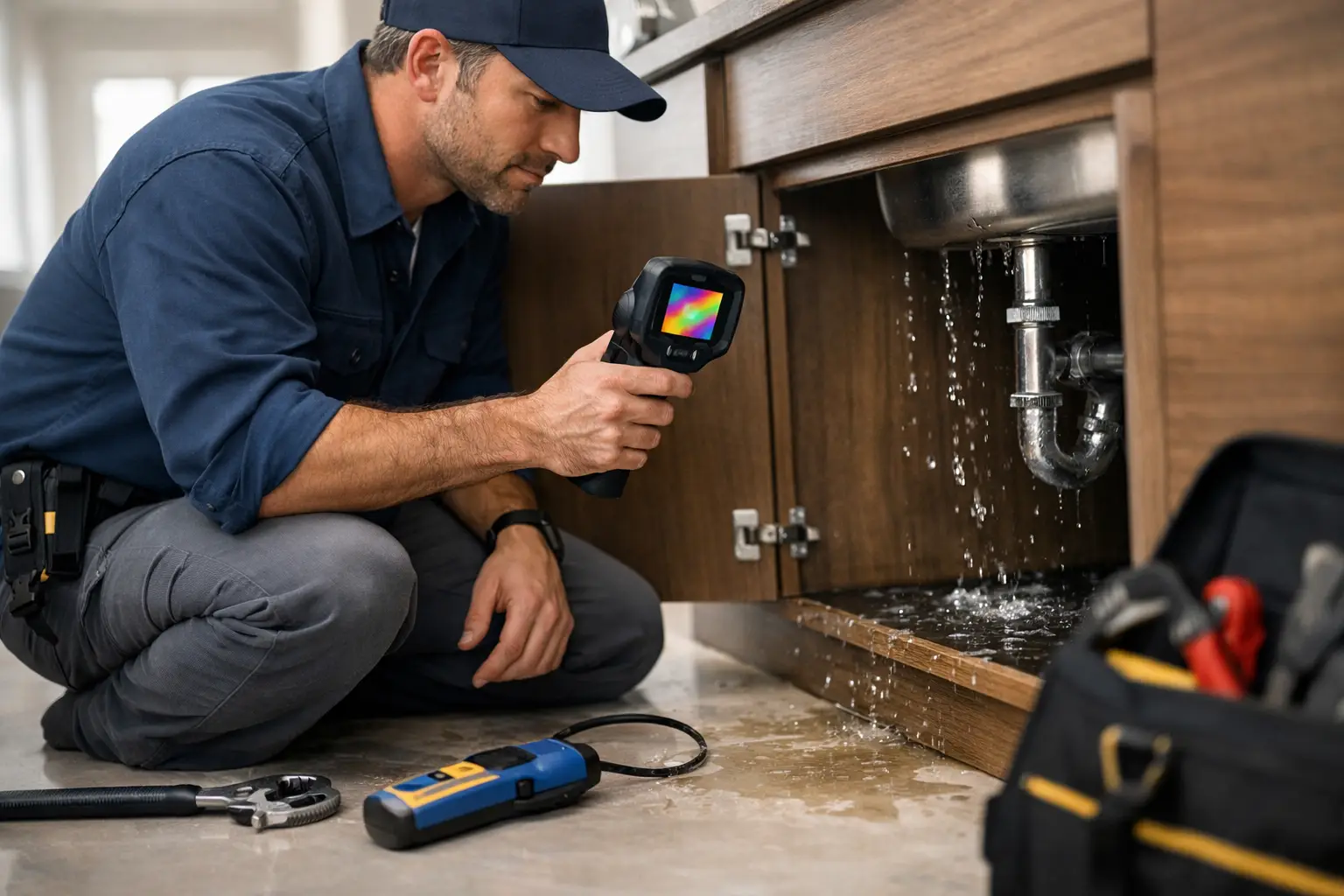
Moisture meters and thermal imaging can also help. These tools do not always show the leak itself, but they can show where moisture is collecting or where temperature differences suggest water movement behind a surface.
Used correctly, these methods are effective. Used carelessly, they can lead to false confidence. That is why experience matters as much as equipment.
When leak detection is most accurate
Leak detection tends to be most reliable when there are consistent symptoms and a clear plumbing pattern to follow. A steady pressurized leak in a water line is often easier to trace than an intermittent issue that only shows up during heavy appliance use or after rain.
For example, if your water meter moves when no fixtures are running, that points toward an active water supply leak. If one room keeps developing moisture at the baseboard and the rest of the house is dry, that helps narrow the field. If a leak happens only when an upstairs shower is used, that gives a technician a testable condition.
The more specific the symptom, the better the chances of pinpointing the source quickly. That is one reason honest communication from the homeowner helps. Seemingly small details, like when you first noticed the smell or whether the problem gets worse at night, can make a difference.
When results can be less clear
There are times when leak detection works, but not with perfect precision on the first visit. Intermittent leaks are a good example. If a pipe only leaks when hot water runs, or a drain only seeps when a tub is filled to a certain level, recreating the problem can take time.
Very small leaks can also be harder to locate, especially if they are under a slab or in an area with a lot of surrounding noise. The same goes for situations where more than one problem is happening at once, such as a supply line leak combined with exterior water intrusion.
This is where unrealistic promises become a problem. A trustworthy plumber should explain what the testing shows, what it does not show, and whether additional isolation or limited access may be needed. Leak detection is effective, but it is not magic. Anyone claiming they can find every leak instantly with zero uncertainty is overselling the service.
Does leak detection work without tearing up walls or floors?
Often, yes. That is one of the biggest benefits. Modern leak detection methods are meant to minimize damage by locating the likely problem area before repair work begins. Instead of opening an entire wall or breaking a large section of flooring, a technician can often identify a much smaller access point.
That said, detection and repair are not the same thing. Even if the leak is found with non-invasive methods, reaching the pipe may still require opening a wall, ceiling, or slab. The difference is that the opening is more controlled and more likely to be in the right place.
For homeowners, that distinction matters. Leak detection can save money on unnecessary demolition, but it does not always eliminate the need for access during repair.
Signs you should not wait to schedule leak detection
Some leaks announce themselves loudly. Others stay quiet while damage spreads. If you notice unexplained increases in your water bill, reduced water pressure, water stains, bubbling paint, warped flooring, mildew odors, or the sound of running water when nothing is on, it is smart to act early.
The same goes if your meter is moving when all fixtures are off, or if you have recurring wet spots around the yard that are not tied to irrigation or rain. In commercial spaces, even a small hidden leak can interrupt operations, damage finishes, and create liability issues if floors become slick or sanitation is affected.
Waiting usually does not make a leak easier to solve. It usually makes the repair larger and the damage more expensive.
What a good leak detection service should give you
A professional leak detection appointment should leave you with clarity. You should understand whether a leak is likely present, what part of the system is involved, how confident the findings are, and what the next repair step looks like.
You should also get straightforward communication about pricing and limitations. If more testing is needed, that should be explained plainly. If the issue appears to be plumbing-related but not fully exposed yet, that should be said clearly too.
This is where homeowners often get frustrated. They do not mind paying for real diagnostic work. They mind paying for vague answers, pressure tactics, or recommendations that sound bigger than the evidence supports. A disciplined plumber respects that difference.
Choosing the right plumber matters as much as the technology
The question is not only does leak detection work. The better question is whether the company performing it knows how to diagnose plumbing problems honestly and accurately.
Tools matter, but judgment matters more. A senior technician should know how to separate a plumbing leak from condensation, roof intrusion, groundwater, or an appliance issue. They should know when to test further and when the evidence is already strong enough to proceed with repair.
That is especially important in older homes, remodeled properties, and buildings with a mix of original and updated plumbing. Pipe materials, previous repairs, slab construction, and fixture changes can all affect what the test results mean.
Blue Tide Plumbing approaches leak detection the same way any serious repair should be handled – fast response, clear findings, upfront pricing, and no games. When water is going where it should not, you need answers you can act on.
If you suspect a hidden leak, the most helpful move is not to wait for visible damage to get worse. It is to get the problem checked while the repair can still stay focused, controlled, and far less disruptive.
Leave a Reply