




A higher water bill with no clear reason usually means one thing – water is going somewhere it should not. That is where people start asking, what is a leak detection, and do I actually need one? In plain terms, leak detection is the process of finding hidden plumbing leaks without tearing up more of your property than necessary.
That matters because many leaks do not show up as a dramatic pipe burst under the sink. They happen behind walls, under slabs, in ceilings, around fixtures, or along water lines where the damage builds quietly. By the time you see stains, warped flooring, mold, or a drop in water pressure, the leak may have been active for days or weeks.
What is a leak detection?
Leak detection is a professional inspection used to locate the source of unwanted water loss in a plumbing system. The goal is not guesswork. The goal is to identify where the leak is happening, confirm how serious it is, and help you move toward the right repair.
In many cases, leak detection is the step that prevents unnecessary demolition. Instead of opening multiple walls or digging in the wrong place, a trained plumber uses testing methods and specialized equipment to narrow down the exact area of the problem. That saves time, reduces disruption, and often lowers the total cost of the repair.
For homeowners and small business owners, that distinction matters. A hidden leak can damage drywall, cabinets, flooring, and foundations. It can also create secondary problems like mildew, musty odors, and electrical risk if water reaches wiring.
Why leak detection matters more than people think
Some plumbing problems announce themselves immediately. Others stay quiet until the bill arrives or the damage is hard to ignore. Leak detection matters because hidden water loss tends to spread beyond the pipe itself.
A small pinhole leak in a copper line may not seem urgent on day one. But if it is inside a wall, that steady drip can weaken materials, stain surfaces, and support mold growth. A slab leak can be even more expensive if it goes unnoticed, especially in South Florida homes where moisture issues can escalate quickly.
There is also the cost of wasted water. Even a slow leak can add up over a month. If the leak is on a pressurized line, the waste can be significant, and the property owner often has no clear clue where it is happening.
Leak detection is also important when you are trying to avoid the wrong repair. Replacing a faucet because you hear dripping does not help if the actual leak is under the floor. Accurate diagnosis comes first.
Common signs you may need leak detection
You do not need to see water pouring out of a pipe to have a leak. In fact, the most serious cases often start with subtle warning signs.
An unexplained increase in your water bill is one of the biggest red flags. If your usage habits have not changed but the bill jumps, there may be hidden water loss somewhere in the system. Low water pressure can also point to a leak, especially if it affects more than one fixture.
Other signs include damp drywall, bubbling paint, warm spots on the floor, musty smells, mold growth, water stains on ceilings, or the sound of running water when everything is turned off. Outside, you may notice soggy areas in the yard or unusually green patches over a buried line.
Not every one of these signs confirms a leak. Sometimes low pressure comes from buildup, and stains can come from old damage. That is why proper testing matters. A good plumber verifies the source before recommending the repair.
How professional leak detection works
When people ask what is a leak detection, they are often really asking what a plumber actually does during the visit. The answer depends on the type of property, the symptoms, and where the leak is suspected.
A professional usually starts with the basics. That means listening to your description of the problem, checking visible plumbing, reviewing pressure behavior, and looking for signs of moisture or active water movement. From there, testing becomes more targeted.
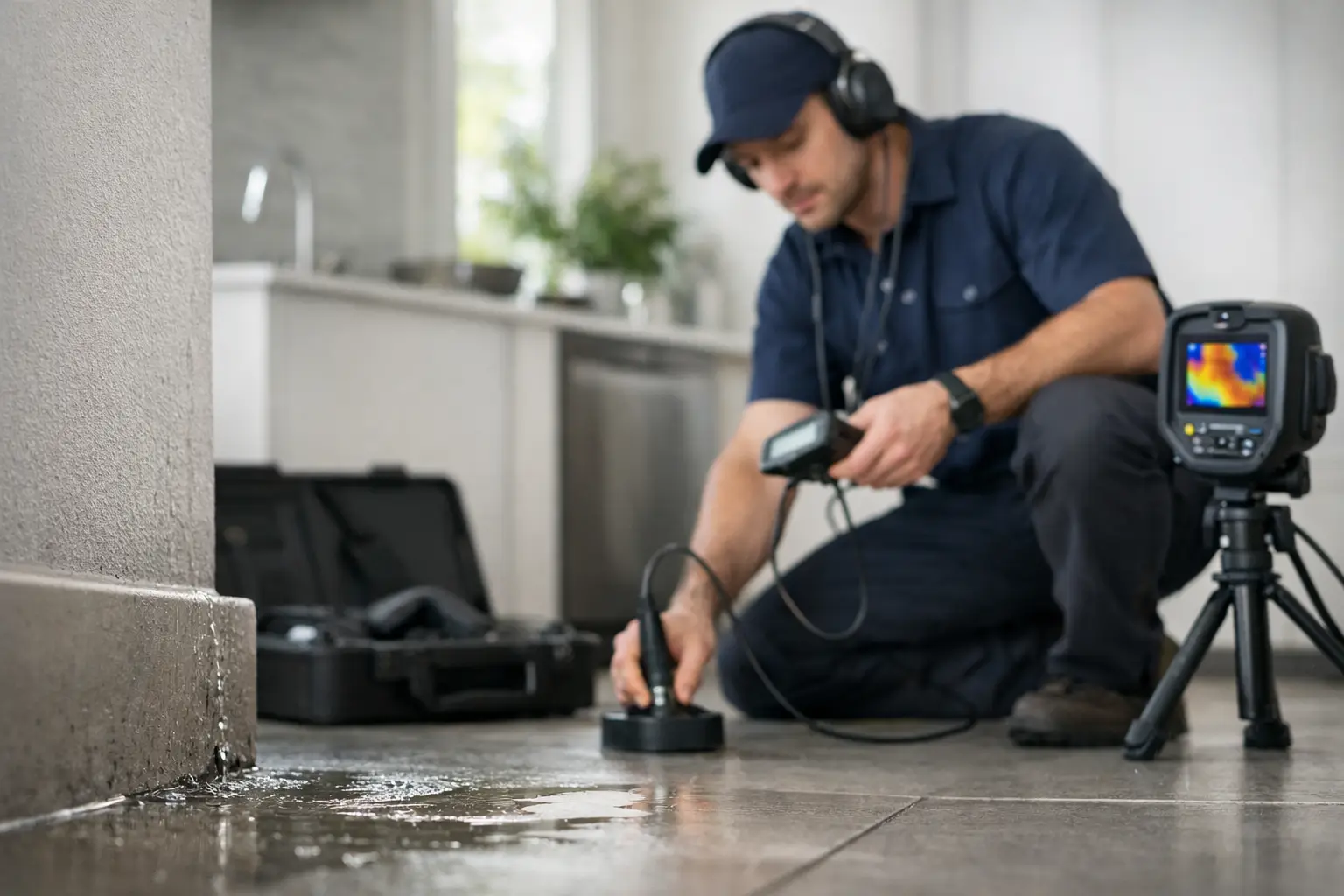
Pressure testing is one common step. If a section of the plumbing system will not hold pressure as it should, that helps confirm a leak exists. Moisture meters may be used to identify damp areas behind finished surfaces. Acoustic listening devices can help detect the sound of water escaping under slabs or behind walls.
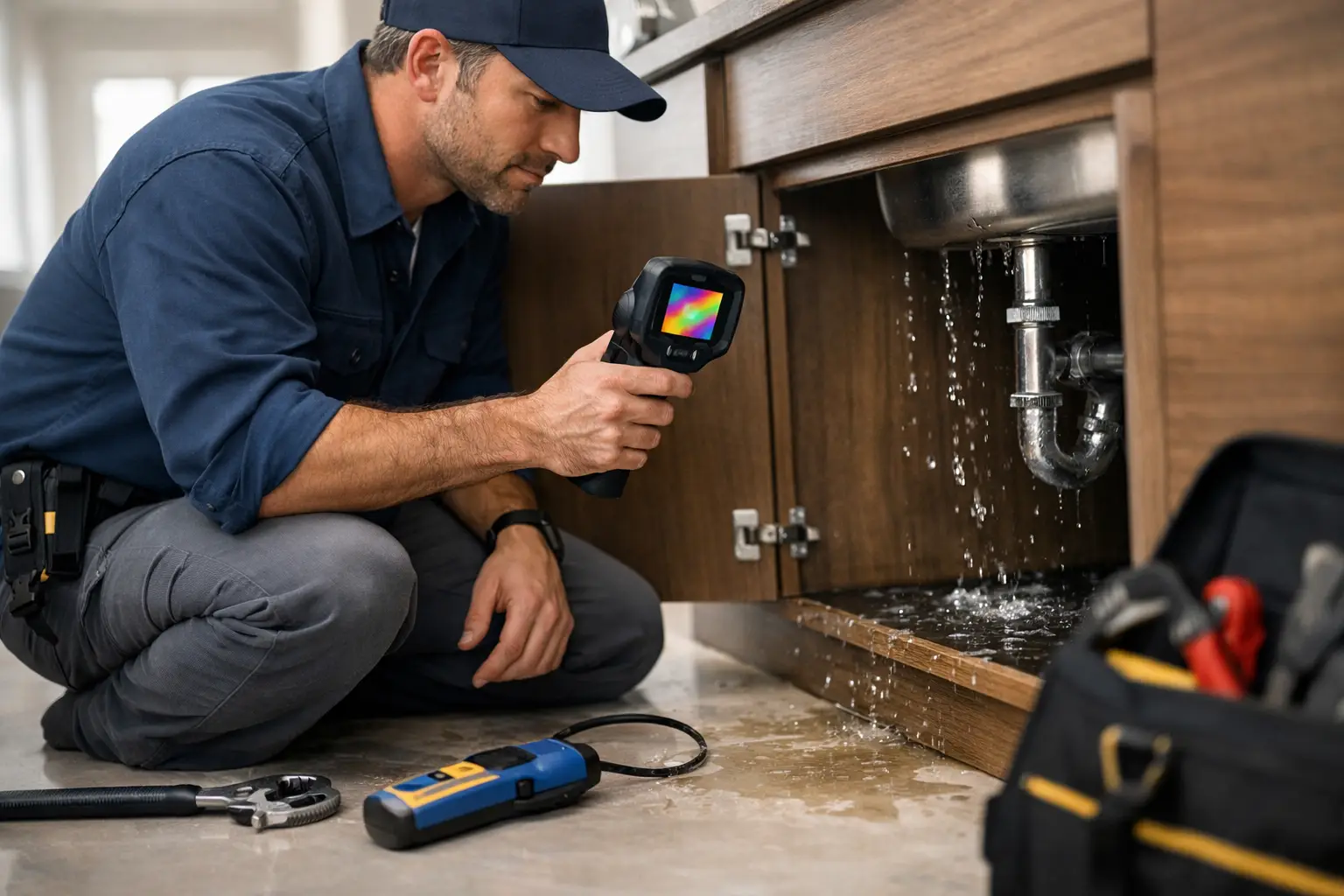
In some cases, thermal imaging helps spot temperature differences caused by hidden moisture or hot water line leaks. Camera inspections may also be used if the issue appears tied to drain or sewer lines rather than fresh water supply lines. Each tool has a purpose, and the right method depends on the conditions at the property.
The best leak detection work is careful, not flashy. It is about narrowing the problem down with enough confidence that the repair can be done efficiently.
Not all leaks are the same
A supply line leak, a drain leak, and a slab leak do not behave the same way. Supply line leaks are often under constant pressure, so they can cause steady water loss and a fast-rising bill. Drain leaks may not show up until sinks, showers, or appliances are in use.
Slab leaks are one of the more concerning types because they occur below the concrete foundation. You might notice warm flooring, cracks, damp spots, or the sound of water beneath the floor. These jobs require a more exact approach because unnecessary breaking of the slab adds cost and disruption.
Roof leaks, window leaks, and AC-related moisture can also be mistaken for plumbing issues. A disciplined plumber does not assume every stain is a pipe leak. Good leak detection includes ruling out what the problem is not.
What happens after the leak is found
Finding the leak is only part of the job. Once the source is identified, the next step is deciding on the right repair based on access, pipe condition, and the extent of damage.
Sometimes the fix is simple, like replacing a failed shutoff valve, tightening a fixture connection, or repairing a short section of exposed piping. Other times, the situation is larger. A line behind a wall may need to be rerouted. A slab leak may require direct access and repair, pipe rerouting, or in some cases more extensive replacement if the line has multiple weak points.
This is where honest diagnostics matter. The cheapest fix is not always the best fix, but the biggest repair is not always necessary either. It depends on the age of the plumbing, the material, where the leak is located, and whether the damage suggests a one-time failure or a broader problem.
A trustworthy plumber explains those trade-offs clearly. You should know what was found, what your options are, and what each repair path means for cost and long-term reliability.
Can you detect a leak yourself?
You can catch early warning signs, and that is worth doing. One simple check is to shut off all water in the home and watch the water meter. If the meter keeps moving, there is a good chance water is escaping somewhere.
You can also look for pooling water, cabinet moisture, staining, or mildew odors. Toilets are another common source of hidden waste, and a simple dye test can help reveal a leaking flapper.
But self-checks have limits. They can tell you something may be wrong, not always where the problem is. If the leak is behind tile, under concrete, or inside a ceiling cavity, guesswork usually leads to more damage or unnecessary opening of finished areas.
Professional leak detection is less about doing something magical and more about doing it accurately. That accuracy is what helps protect your property.
When to call right away
Some leaks can wait a day for scheduling. Others should be treated as urgent. If you have water actively coming through a ceiling, pooling around electrical areas, sudden major pressure loss, or signs of a burst pipe, call immediately.
The same goes for suspected slab leaks or any hidden leak that appears to be causing rapid damage. Fast response can make the difference between a focused repair and a larger restoration project.
For homes and light commercial properties, speed matters, but so does discipline. A rushed guess is not the same as a proper diagnosis. That is why many property owners choose service teams like Blue Tide Plumbing that focus on quick response, upfront pricing, and finding the real issue before recommending the fix.
If you are hearing water where there should be silence, seeing stains that are spreading, or watching your bill climb for no clear reason, trust that instinct. Leak detection is not an extra service people order for fun. It is how you stop a hidden plumbing problem before it turns into structural damage, mold, and a much more expensive repair.
A small leak rarely stays small forever, and catching it early is one of the smartest calls you can make.
Leave a Reply